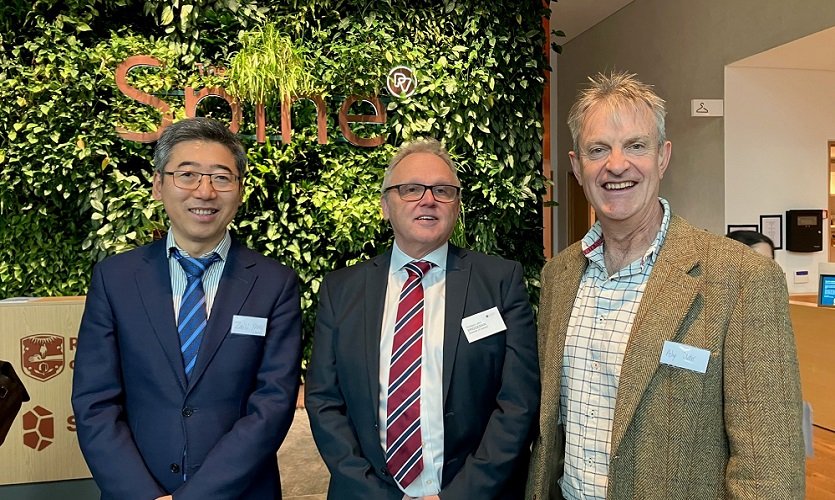
On the 2nd and 3rd of July 2025, the University of Bristol—renowned as the UK’s premier hub for marine renewable energy—opened its doors to the 12th PRIMaRE Conference.
This event, powered by the Partnership for Research In Marine Renewable Energy (PRIMaRE), united the sector’s foremost academics, trailblazing industry professionals, and inspired early-career researchers under a shared vision: transforming our oceans into engines for sustainable energy.
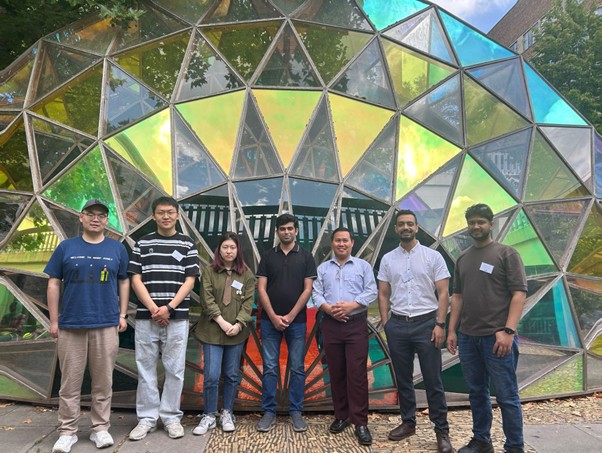
Over two dynamic days, participants explored state-of-the-art solutions, from next-generation tidal turbines to floating offshore wind farms, as well as the vital role of digital advances, such as machine learning, in shaping the clean energy landscape. A group of PhD researchers from the N0MES programme attended this two-day conference.
The first day of the conference centred on the theme of “Tidal Energy and Offshore Floating Wind Energy.” The agenda reflected an intersection of artificial intelligence and engineering excellence and showcased how machine learning is revolutionising hydrodynamic simulations and control systems for wave energy converters. Attendees delved into presentations illuminating novel approaches: machine-learning-enhanced modelling of tidal flows, strategies for reducing mechanical loads on tidal devices, environmental impact assessments—including seal-turbine interactions—and invaluable lessons gleaned from operational deployments. Offshore floating wind was a key emphasis as well, with sessions spotlighting innovative turbine support structures, strategies for optimising dynamic cables, and advances in tension leg platform design.
The academic insight was complemented by practical wisdom during the afternoon keynote, delivered by Mr. Tom Adcock of Blackfish Engineering. Through detailed case studies drawn from wave and tidal sector projects, Mr. Adcock highlighted the critical importance of structured systems engineering. He underscored that early-stage planning, rigorous verification strategies, and agile delivery of minimum viable products form the backbone of transforming new concepts into commercially viable technologies. The first day concluded with a lively conference dinner at Brown Bristol, cultivating a collegial atmosphere where delegates could further engage and forge meaningful cross-sector relationships.
Day two commenced with a forward-looking keynote by Mr. Alex Argyros, BP’s Lead for Floating Wind. He offered an incisive overview of global market trajectories and technological progress in floating offshore wind (FOW), alongside an honest appraisal of the persistent challenges related to mooring, platform design, and the imperative of scaling deployment. The technical sessions that followed were equally compelling, examining cutting-edge topics such as geotechnical uncertainty, wet storage solutions for turbines, multi-rotor system design, and data-driven approaches for smart blade manufacturing and advanced wave forecasting.
A highlight of the day was the keynote address by Peter Giddings of the National Composite Centre, focusing on the UK’s Offshore Wind Industrial Growth Plan. Giddings articulated a compelling vision, asserting that cohesive investment, strategic policy, and close research alignment are vital for anchoring robust offshore wind supply chains within the UK—generating profound economic and societal benefits. He also stressed the indispensable contributions of universities and research institutes in steering industrial innovation through foundational scientific research.
After the morning sessions, the conference proceeded to a workshop, “Creating a Strategic Research Agenda for ORE” (Offshore Renewable Energy) led by the experts in which pragmatic dialogues among academics, policymakers, and industry leaders brainstormed together for their near future. This session fostered a vibrant exchange, mapping out policy priorities, skill development pathways, and translational research initiatives to sculpt an ambitious and actionable Strategic Research Agenda.
The 12th PRIMaRE Conference drew to a close with a resounding sense of purpose and an unstoppable momentum. The event left no doubt – the journey to a UK’s clean energy future rests as much on collaborative partnerships as on technological brilliance. Such gatherings are proof that the marine renewable sector is not merely advancing in technical innovation but is also uniting with renewed confidence to address the defining challenges of our time. The PhD researchers from the N0MES Centre learned many things from this conference.
Which of these innovations in marine renewable energy do you find most promising for the future?
Authors: Sai-Htet Aung and Arslan Amin